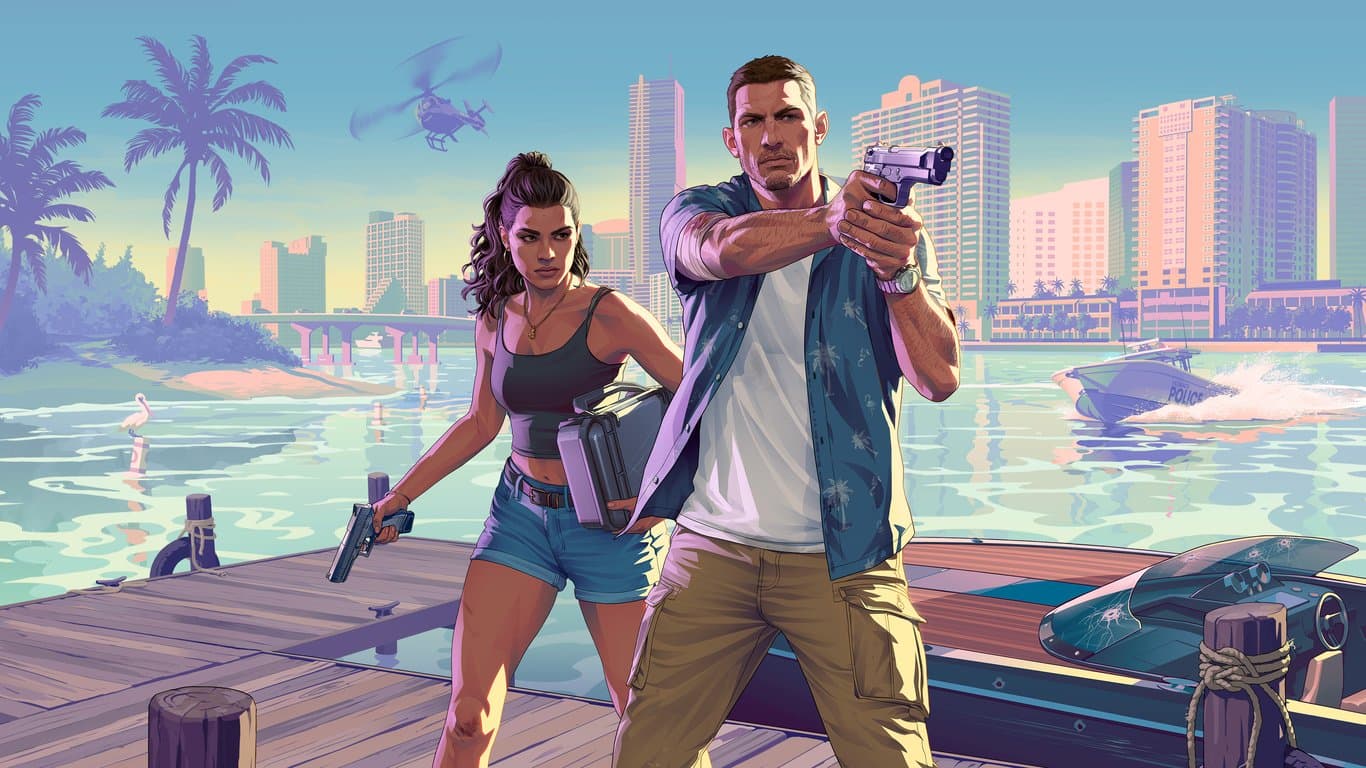
Image generated by Gemini Nano Banana
Intro
Everyone knows GTA V was a massive success. But what if its biggest impact wasn't what happened to GTA V but what happened to the game that came after it?
Because the more successful GTA V became, the harder GTA VI became to make.
But before we get to that, there's a more important question
What did GTA 5 do that other games didn't?
The date was 17th September 2013, Tuesday at 12:00 midnight,
people were standing outside of the store just for it to open so they could buy a copy of gta 5,
gta 5 released generated about $800 million USD worldwide sales in the first day alone,
and as of 2026 they have crossed over $10 Billion
You see, this game was not just better, it was the BEST.
It cost rockstar games $200 million to make gta 5 and this was the most expensive game at that time,
the developers were working 100-Hour a Weeks,
developers and leadership were practically living in the studio,
sleeping under desks or in office rooms just to make the September 2013 deadline.
The other popular games at that time like Call of Duty: Ghosts, FIFA or Watch Dogs they can't even think of competing against gta 5 even if they combine.
But what made this game special?
The game being open world was not a new concept,
there were plenty of games like that,
But the magic happens when you compare this game to the other games of that time,
It feels like GTA 5 was ahead of its time, way more ahead.
It was not just because of the graphics,
Although the graphics were phenomenal, the detailing of the city Los Santos, which is modeled directly after Los Angeles, California, is insane.
But the biggest thing that made GTA 5 from the best selling game to the Game of the Decade was the combination of all of these.
A game might have good graphics, a game might have an addictive story line, a game incredible character development, but GTA 5 had all of them and none of them are just good enough. It was near perfect in every single aspect.
And that'll explain why GTA 6 is so hyped, Rockstar games don't just make games they make the next cultural shift.
On every GTA game launch they set the bar higher and higher just like how they did with GTA 5, people were so crazy about,
but then GTA 5 messed up one thing that would have caused Rockstar games, its entire company.
The disaster of GTA online
Two weeks after the release of gta 6, gta online came out, and it was a disaster. The game was full of bugs, freezing screens, and endless loading loops
The server crashed so often that hordes of players lost characters, rank and hard-earned in-game money
But it was just the beginning, soon players realised that they were monetizing this game aggressively,
Prices for new vehicles, weapons, and properties skyrocketed to astronomical levels
The game's economy was designed to be a slow, painful grind, pushing players to buy real-money Shark Cards,
But even that wasn't Rockstar's worst decision in front of this.
Massive profits from online microtransactions led Rockstar to cancel planned single-player expansions for GTA V
Rockstar had planned additional single-player content for the game,
including story DLC, but those plans were eventually abandoned as GTA Online became an enormous and recurring source of revenue.
Instead of building another paid story expansion that players might finish once, Rockstar had a live service generating money through Shark Cards long after the original game was released.
And from a business perspective, that changed the equation completely: why spend years creating a huge single-player expansion when the online mode could keep players spending indefinitely? The result was a bizarre trade-off for players GTA V became one of the most successful games ever made,
but the single-player experience that helped make it special was effectively left behind while Rockstar focused increasingly on GTA Online.
And this shift wasn't just about what Rockstar did after GTA V it may have changed how Rockstar approached the entire GTA franchise.
GTA online proved that Rockstar could keep one game commercially relevant for years without rushing to replace it with a new installment.
Instead of releasing GTA games frequently, Rockstar could continue supporting an existing title, expand its online ecosystem, and keep generating revenue from the same game long after launch.
And that raises a bigger question: Did GTA V prove that Rockstar didn't need to release GTA games frequently?
Did GTA 5 prove that Rockstar didn't need to release GTA games frequently?
The biggest thing GTA Online proved to Rockstar wasn't simply that players liked multiplayer, it proved that one GTA game could keep making money for years without being replaced.
And the numbers are difficult to ignore.
By fiscal 2024, Take-Two reported $5.35 billion in total revenue, with 78.8% coming from recurrent consumer spending money generated through things like virtual currency, in-game purchases and additional content rather than simply selling a new game.
GTA Online and GTA V were among the company's largest contributors, while GTA V itself had already sold around 200 million copies worldwide.
From a business perspective, this completely changed the incentive to release GTA games frequently.
Rockstar wasn't struggling to survive while waiting for GTA VI it had already created a machine that could keep generating revenue from the same game.
Every major update gave players another reason to return, while Shark Cards gave Rockstar a way to monetize those players without requiring them to buy another $60 game.
And that's the genius of the model: a traditional GTA release gives Rockstar a huge payday at launch; GTA Online could potentially keep paying them for years. By 2024, GTA Online remained one of Take-Two's largest contributors to recurrent consumer spending, more than a decade after GTA V originally launched.
But money alone doesn't explain why it worked. GTA Online had something that made the grind unusually effective: progression tied directly to status and freedom.
The more money you made, the more properties, businesses, vehicles and weapons you could unlock and those new assets gave you access to even more ways to make money.
That created a loop: earn money → buy something better → unlock new activities → earn even more money.
It could be painfully slow, especially for players who didn't want to spend real money, but that same progression gave players a reason to keep coming back.
The game didn't need to be perfect; it needed to give players another reason to log in tomorrow.
And despite all of its problems grinding, repetitive missions, aggressive monetization and years of technical issues GTA Online became a massive hit.
So massive that it changed the economics of the entire franchise.
Rockstar had something almost every game publisher wants: a hugely successful game that didn't need a sequel to remain commercially relevant.
That doesn't mean GTA Online was the only reason GTA VI took so long; Rockstar's development ambitions, production scale and other projects also matter but it clearly demonstrated that there was little financial pressure to rush another GTA onto the market.
The result was a strange situation: the more successful GTA Online became, the less urgent a new GTA game became from a business perspective.
But that created a new problem for Rockstar.
If GTA Online could keep GTA V alive for more than a decade, then the next GTA couldn't simply be another successful GTA game. It had to follow one of the biggest entertainment products of its generation.
Rockstar wasn't just making the next installment anymore it was making the game that had to live up to everything GTA V had become.
And that leads to the next question
Did GTA 5's success raise the bar for GTA 6?
Imagine you got the highest marks in your class. Your parents are celebrating, your teachers are impressed, and suddenly everyone expects you to do it again.
Then the next exam comes around, and this time the expectations aren't just “do well” it's “beat your previous score.”
That's basically the situation Rockstar walked into with GTA VI. GTA V wasn't merely a successful game; it became a 210-million-copy phenomenon and one of the biggest entertainment products ever made.
Even Red Dead Redemption 2, another Rockstar blockbuster that sold more than 70 million copies, exists in a different commercial league from what GTA V achieved. So the odds of simply making another GTA and having it become as culturally and commercially massive as GTA V were already a ridiculous challenge.
And that's exactly why the anticipation for GTA VI became so extreme.
Players weren't just waiting for a new map or better graphics; they wanted Rockstar to push almost everything further: a bigger and more detailed world, better NPCs, more realistic physics, an evolving world, and a story built around Jason and Lucia.
But one expectation stands out because it goes beyond simply adding more content: immersion.
Rockstar has always been obsessed with making its worlds feel alive, and GTA VI is being presented as the biggest and most immersive evolution of the series yet.
That's important because GTA V already gave players an enormous playground; for the sequel to feel genuinely next-generation, Rockstar can't just give us more GTA. It has to make the world itself feel more believable.
And that helps explain why GTA VI has taken so long. Rockstar originally announced the game for 2025, before pushing it to May 26, 2026, with the studio explicitly saying it needed additional time to reach the level of quality players expected.
And as of now, Rockstar has pushed the release again to November 19, 2026. Notice what's happening here: Rockstar isn't trying to get GTA VI out simply because the franchise needs a new game.
GTA V and GTA Online have already kept the franchise commercially relevant for years. The sequel therefore has something much more difficult to do.
It has to justify following one of the most successful games in history.
That's the strange consequence of GTA V's success: it didn't just create excitement for the next GTA; it created an almost impossible standard for it to beat.
Rockstar now has a game that has sold over 210 million copies, an online ecosystem that continues generating revenue, and a fanbase that has had more than a decade to imagine what the next GTA could possibly look like.
And when your previous game is still making money and your audience is already expecting something extraordinary, rushing the sequel starts looking less like ambition and more like throwing away an advantage.
So maybe the real question isn't why GTA VI took so long.
Maybe it's this
Did GTA 5 make GTA 6 too valuable to rush?
By this point, GTA VI wasn't just another sequel for Rockstar it was an incredibly valuable piece of intellectual property.
GTA V had become so successful and GTA Online had become so long-lasting that Rockstar had the luxury of taking its time.
In fact, Rockstar itself has described its approach as trying to “significantly move beyond what we have previously delivered.”
That makes GTA VI almost like a performer walking onto a stage after giving the greatest performance of their career: the audience isn't wondering whether you can perform, they're waiting to see whether you can top yourself.
And that's where the stakes become enormous. A rushed GTA VI wouldn't just risk disappointing players; it could damage one of Rockstar's most valuable franchises while ending a business model that had already kept GTA V relevant for more than a decade.
So with enormous expectations, enormous revenue already coming from GTA Online, and very little need to rush another GTA onto the market, Rockstar had something most game studios rarely get: time.
But having that much success behind you creates another interesting question
Did GTA V's success also make Rockstar more willing to take risks with GTA VI, or more afraid to?
GTA V has become one of those games that raises the bar for the entire industry.
It has sold more than 230 million copies, reached $1 billion in retail sales faster than any entertainment release in history, and remained commercially relevant across three console generations.
So what happens when a company like Rockstar reaches that level of success? The logical answer isn't simply that it becomes more afraid of risk.
It can actually afford to take bigger creative risks but it has far less room for a risk to completely fail.
Rockstar has already built enormous trust with its audience, and GTA VI gives it the opportunity to push the series further than ever.
But if that experiment goes badly, the consequences are much bigger too.
Imagine GTA VI launches and players think, “It's good, but not what I expected.” That's one scenario.
Rockstar could continue supporting it, add content, fix problems, and potentially change how people feel about the game over time.
But there's another scenario that's much harder to recover from: what if players genuinely hate it? Then the conversation wouldn't simply be about a disappointing sequel.
It could become a historical comparison.
GTA V was the game that set the bar, and GTA VI was the game that couldn't clear it.
That's an uncomfortable legacy for Rockstar, especially when the company has spent years positioning the sequel as the next major evolution of the series.
Rockstar has explicitly said that its goal with each game is to exceed audience expectations, and GTA VI is no exception.
So GTA V's success may have changed Rockstar's relationship with risk in a strange way: more freedom to experiment, but an even greater need to make sure the experiment works.
And that leads to perhaps the biggest question in this entire story:
Is GTA VI actually the product of GTA V's success?
Is GTA 6 actually the product of GTA 5's success?
In a way, yes.
but probably not in the way you might think.
Rockstar wasn't sitting around after GTA V thinking, “Well, this game was successful, so I guess we should make GTA VI now.”
The next GTA was always going to happen.
In fact, just weeks after GTA V launched in 2013, Rockstar North president Leslie Benzies was already talking about having ideas for GTA VI, while making it clear that GTA Online was the immediate focus.
But there's an important distinction here: that doesn't mean GTA VI was already in full production.
Take-Two later clarified that the game began development “in earnest” in 2020, after Red Dead Redemption 2.
And then came the waiting game.
Rockstar officially announced GTA VI in December 2023 with a 2025 release window.
That date eventually moved to May 26, 2026, with Rockstar saying it needed additional time to reach the quality level players expected.
And now the official release date is November 19, 2026.
On paper, that sounds like a ridiculously long road for a sequel.
But there's another piece of the puzzle that makes the timeline much more interesting: GTA Online almost didn't make it.
When GTA Online launched in 2013, it was plagued by problems, and Rockstar later admitted that the first eight or nine months were not successful.
By the middle of 2014, Rockstar's Imran Sarwar said the team was losing players and the game was close to failing. Instead of becoming a short-lived multiplayer experiment, though, GTA Online eventually turned into one of the biggest long-running businesses in gaming.
That completely changed the situation surrounding the next GTA.
Rockstar had gone from worrying about whether its online experiment would survive to having an enormous ecosystem that was still contributing heavily to Take-Two's business more than a decade later.
In fiscal 2026, Take-Two reported $5.2 billion in recurrent consumer spending, with GTA Online and GTA V among its largest contributors to net bookings.
So GTA VI wasn't born because GTA V suddenly became successful; it was always the natural next chapter of the franchise.
But the scale of GTA V's success, and especially the unexpected success of GTA Online, changed what that next chapter had to be.
Rockstar was no longer following up an ordinary blockbuster.
It was following the game that had become a decade-long phenomenon, while carrying the expectations created by an online ecosystem that almost failed before becoming massive.
And that's probably the biggest legacy of GTA V: it didn't create the need for GTA VI.
It made GTA VI an enormous expectation.
And now, after everything we've looked at the money, the delays, GTA Online, the expectations and the pressure there's only one question left: what does all of this actually tell us about why GTA V became such a phenomenon in the first place?
Conclusion:
What does all of this actually tell us about why GTA V became such a phenomenon in the first place?
GTA V Didn't Just Succeed. It Changed the Rules.
Looking at everything that happened after GTA V, its biggest achievement might not even be the 200+ million copies sold or the billions generated by GTA Online.
It was what that success allowed Rockstar to do.
GTA Online proved that a single GTA game could remain relevant for more than a decade, generate enormous recurring revenue, and keep players coming back without Rockstar needing to release another numbered GTA every few years. And once Rockstar had that, the entire equation around GTA VI changed.
But that success created a strange paradox.
The better GTA V performed, the harder GTA VI became to make.
Rockstar had more money, more time and less financial pressure to rush the sequel but at the same time, every year GTA V remained successful, the expectations surrounding its successor became even bigger.
GTA VI isn't following some forgotten game that players moved on from years ago.
It's following one of the biggest entertainment phenomena of its generation.
That's why the story of GTA V is bigger than simply “Rockstar made a really successful game.”
Its success changed Rockstar's business strategy, transformed GTA Online into a decade-long ecosystem, raised the bar for what players expect from an open-world game, and ultimately made the next GTA one of the most anticipated releases in gaming history.
GTA V didn't create the need for GTA VI. It created the impossible standard GTA VI has to follow.
And perhaps that's the real legacy of GTA V: it didn't just give Rockstar a bigger game to follow, it made the next GTA almost impossible to follow.
Disclaimer: This is an opinionated analysis of how Grand Theft Auto V shaped the development, expectations, and business strategy surrounding Grand Theft Auto VI.
The opinions and interpretations are my own. Factual claims, statistics, dates, and statements from Rockstar Games, Take-Two Interactive, and other sources are cited throughout the article so you can verify them yourself.